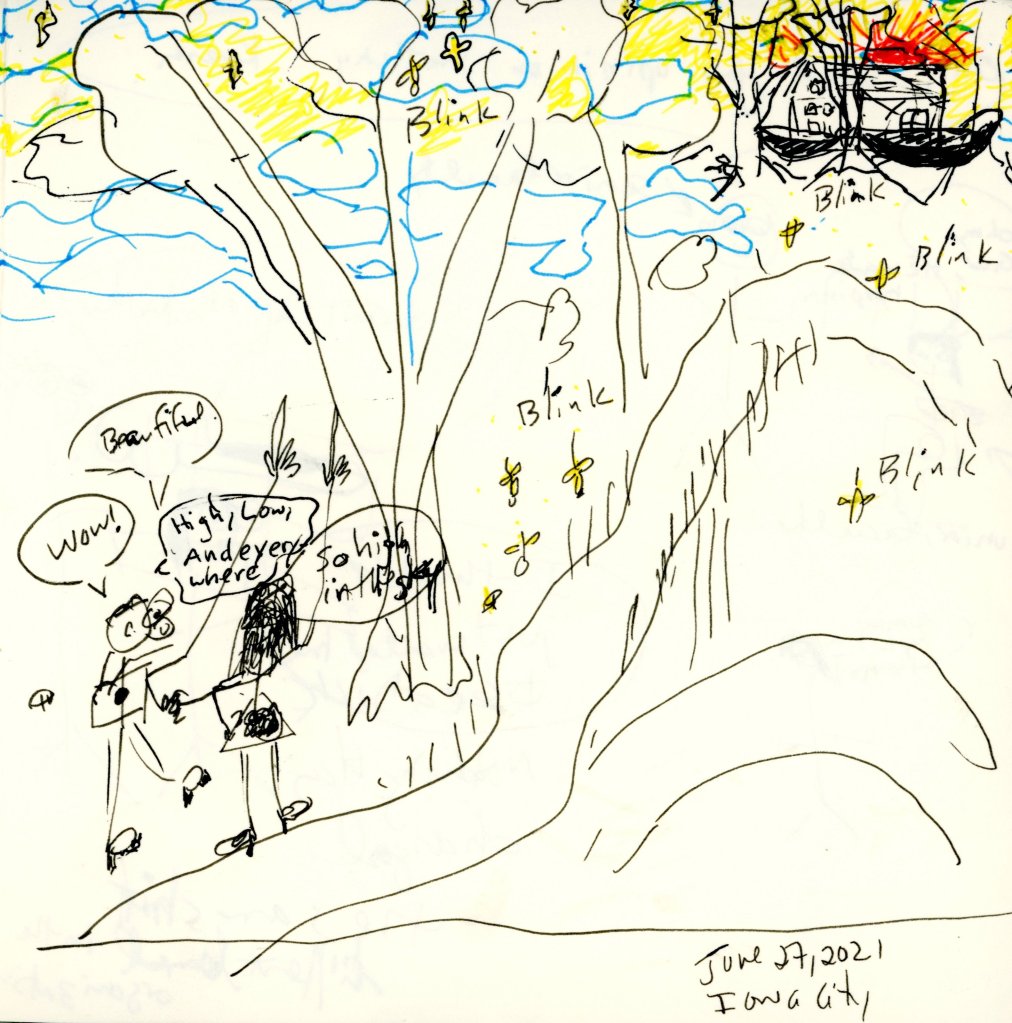
Science isn’t an exercise in cold-blooded rationality. Scientists are — and always have been — emotional, creative, intuitive, whole human beings, asking questions about a world that was never made to be catalogued and systematized.
Merlin Sheldrake in Entangled Life
In a recent discussion with colleagues considering creating a department podcast, one faculty member suggested placing a poem in each episode to stir the imaginations of the listeners, to engage their humanity — after all Iowa City is Home of the Writer’s Workshop, which brings some fine writers of poetry and fiction to our fair city. Another member of the group suggested — if a poem was going to be included at all — that it be placed at the end. The message: don’t burden listeners with requiring them to digest poetry on their way to medical knowledge. I know poetry is not for everyone, but the moat between the arts and science has grown too wide and too deep.
In Entangled Life: How Fungi Make Our Worlds, Change our Minds and Shape our Futures, biologist Merlin Sheldrake shares that he and many of his scientist friends feel “embarrassed about admitting that the tangle of [their] unfounded conjectures, fantasies, and metaphors might have helped shape [their] research.” When it comes time to write up the research findings, he continues, there’s a whole lot of scrubbing to clean it up, which involves erasing “flights of fancy, idle play, and thousands of trials and errors.” But that doesn’t mean these elements — flights of fancy and idle play — three cheers for idle play — weren’t central to the entire enterprise.
In the poem “The Hundred Languages” Loris Malaguzzi writes, “The school and the culture/ separate the head from the body. / They tell the child: / to think without hands / to do without head / to listen and not speak / to understand without joy/ to love and to marvel / only at Easter and at Christmas. / They tell the child: / to discover the world already there / and of the hundred / they steal ninety-nine. / They tell the child: / that work and play / reality and fantasy / science and imagination / sky and earth / reason and dream / are things / that do not belong together.” (Translation by Emilia Approach.)
The modern conception of science has guillotined our hearts from our minds, Mallaguzzi reminds us. “And thus they tell the child that the hundred is not there.”
Thankfully, there is the wisdom of children. And so the child is not fooled. “The child says / No way. The hundred is there.”
Treasure and feed your imagination. It’s not a luxury. It’s not a side dish. Put it in the driver’s seat where it belongs, and remember, always remember, the hundred is there. It’s definitely there.
 Sarah Averill MD