My friend Valarie needs to be outside every day. She needs walks in nature, long walks, even in winter. She organizes her life around having time for walks. She also needs to be called Valarie and not Val. And not for any reason aside from personal preference. No skeleton in the closet. No nasty aunt or bully named Val whose namesake she doesn’t want to be. She just doesn’t like the nickname. She doesn’t hesitate to make known her preference to be called Valarie. If you cal her Val, she will gently remind you that she prefers be called Valarie.
Every day we teach each other how we want to be treated.
Valarie, an old friend
Valarie is consistent and clear. She makes this boundary with everyone she meets.
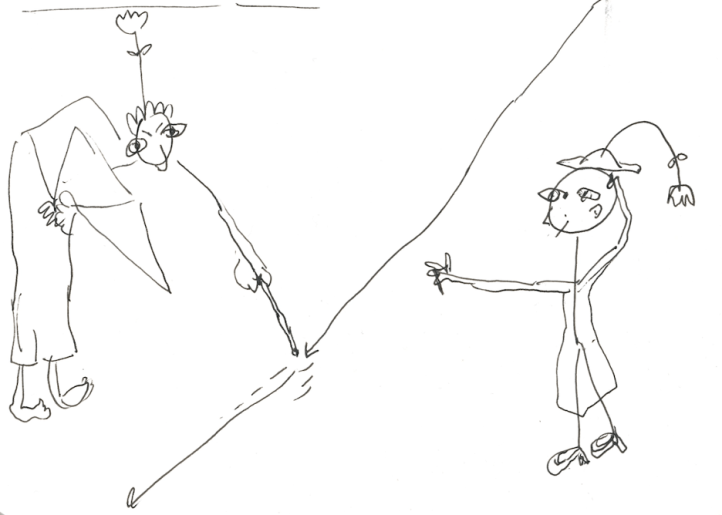
Valarie has taught me much more about how she wants to be treated. Her practice setting boundaries surprised me at first. Over time, I have come to appreciate how clear she is. I now watch with admiration as she demonstrates the art of drawing boundaries. I want to learn how to do this artfully, the way she does.
It’s surprisingly hard. Hard enough, in fact, that I signed up for a workshop with the mindfulness expert Kristin Neff to learn more about “fierce self-compassion,” a version of self-compassion that is not based on retreating into rest and relaxation. Rather, it embraces self and collective advocacy, setting boundaries, and drawing on the energy that anger provides when it is needed. Anger is something I’ve always regarded as a purely negative emotion to be avoided. Many of the workshop participants shared this. We all appreciated the perspective that Kristin Neff brought to working with our anger to mine the positive benefits it can bring to activating self and others for change.
As is true for most women I know, the tender forms of self-compassion come more naturally to me. As Neff and others have observed and studied, women are socialized to avoid strong emotions, especially those labeled negative like anger. In the workshop today she shared research of other scholars regarding how people respond to expressions of anger expressed by women. From a young age, when girls express anger it is either denied or labeled something else, sometimes even misidentified as sadness. When adult women express anger they are more likely to be dismissed. In contrast, the same emotion expressed by a man makes him more likely to be taken seriously. How confusing to have anger labeled sadness, a very different emotion.
In addition, Neff cited research on how women are also socialized to be valued for acts of service and selflessness, which leads to all sorts of distortions of value in the economy. Women are supposed to find reward in jobs that pay little because they are rewarded by meaning and purpose. This leaves many women poor and at the bottom of organizational charts that don’t promote women for performing acts of service, not matter how impactful.
At the end of the workshop today we were paired up to share about challenges setting boundaries. My partner, Frieda (named changed for confidentiality), lives in Australia, halfway around the world from Iowa. When I asked Frieda how setting a boundary feels for her, specifically now it feels in her body, she said it feels like she can’t breathe.
So when she wants to say “no,” Frieda feels like she can’t breathe. Frieda is not alone. Self-compassion teaches us that we are not alone. I feel that way too. I feel the glottic stop in the back of my throat when I think about drawing a boundary with work to pursue the artful life that I’ve deferred for the last 15 years.
What’s under the feelings that come up when you imagine drawing a boundary?
Kristin Neff
“What’s under the feelings that come up when you imagine drawing a boundary?” Neff asked part way through an exercise.
For me, like many others who struggle with setting boundaries and saying no, under that feeling of not being able to breathe is a terrible fear, one that rolls its yellow eyes and gnashes its terrible teeth. The fear of being labeled unkind, unfriendly, unlovable, of being outcast or made irrelevant, removed from the team. But erasing myself to be part of team won’t work forever. The pencil has to come out of the box. The lines must eventually be drawn, or the self erased.
How hard is it for you to draw a boundary, even a small one?
Draw your line! No matter how big or small, if you have a success to share drop on by.
 Sarah Averill MD